
November 7, 2024
Fund III Investor Update: Q3 2024
This has been an exciting first quarter for Fund III. We have made meaningful progress in acquiring and stabilizing the portfolio.


We 3x’d last year to 1,000 units under management — and it was a year of growing pains.
Every time we’ve doubled in size — from 100 to 200, from 500 to 1,000 — we’ve effectively become a different company. What worked before no longer suffices, as each order of magnitude reveals a new layer of constraint. Unlike software, where the incremental cost is minimal to serve more customers, real estate embodies the messiness of humans and society. People come, go, form households, die. Without constant oversight, replacing ‘reasonable judgment’ with a system becomes an exercise in system building.
At a small scale, the system can rely on exceptional individual performers - people who just make things happen. At a larger scale, success depends on the reliability of the system itself: the processes, tools, and feedback loops that allow entry-level staff to achieve above-average results.
This year was about building that reliability - engineering the organization not just to handle 1,000 units, but to be designed for 10,000.
In the early stages of a company, growth is powered by human energy, improvisation, and direct oversight. Problems (and their solutions) are simple enough to exist within the context of one person’s mind and effort. Over time, you can’t scale people’s stamina. You can only scale systems.
We’ve spent the past year replacing heroic effort with structural efficiency. We integrated our core platforms — AppFolio, Knowify, Property Meld, Ramp, QuickBooks, and Toggl — into a single operating framework. The goal was not to add tools, but to make data flow automatically from property to portfolio, so that decision-making becomes a function of data quality. What seems like a simple system on the surface ends up integrating multiple tools and data layers in order to function properly as a full-stack portfolio.
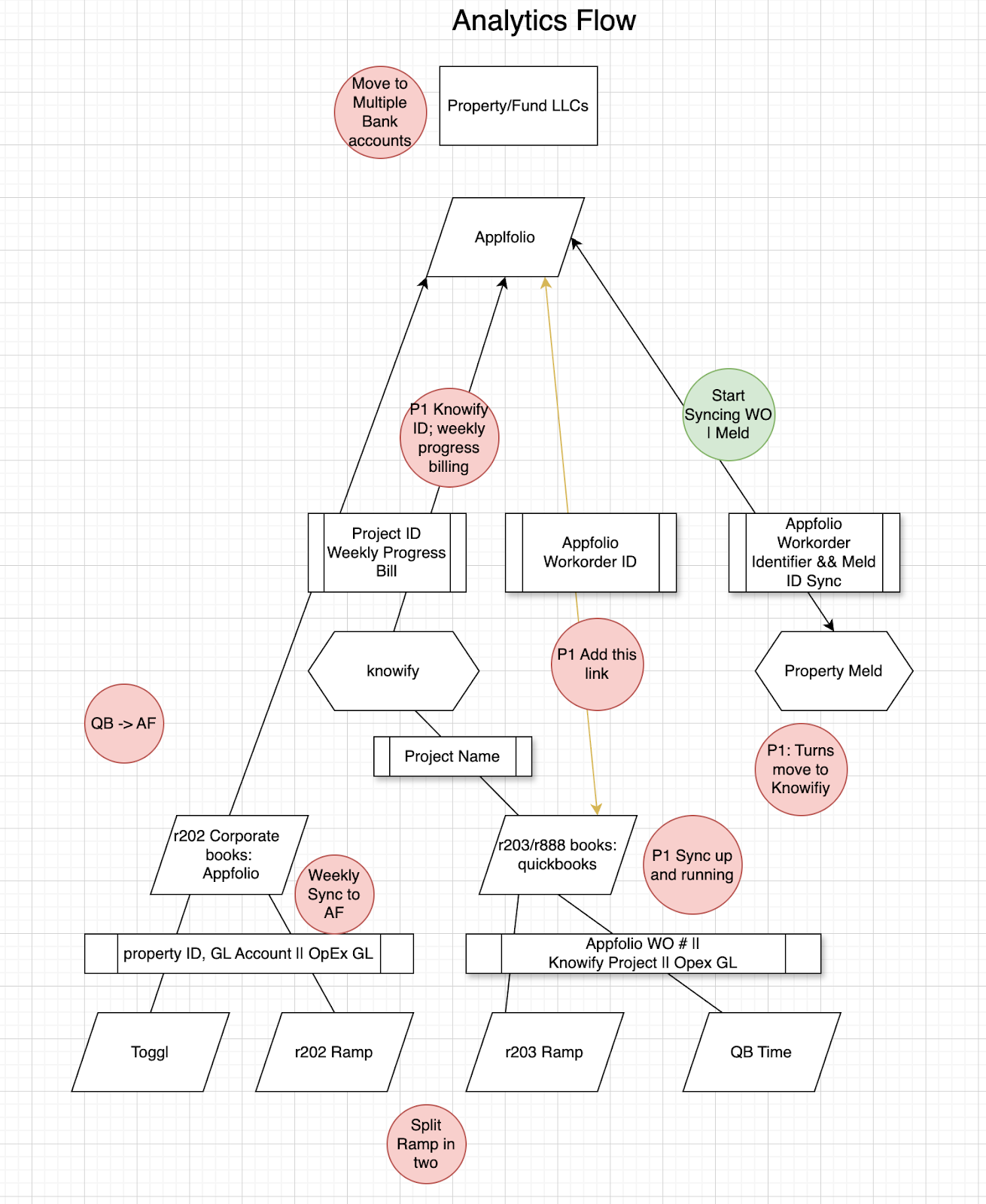
This may sound procedural, but it changes the character of the company. In the past, a problem’s discovery depended on someone noticing it. Now, problems surface because the system identifies them.
Our decision to build full-stack operation in-house is often met with surprise. Most investors prefer to outsource property management, viewing it as a necessary but low-value function.
We have a different thesis. Operations is fundamental to unlocking returns. Without control over operations, an owner becomes a passive recipient of outputs rather than an active manager of inputs. It determines what and how data is gathered, how insight is generated, and how experimental feedback loops are created. Every efficiency gain, every improvement in tenant retention or leasing velocity, is a function of how quickly we can observe, test, and iterate.
It also opens up a large and inefficient segment of the market: properties between 30 and 250 units — too complex for mom-and-pop operators, too small for institutional capital. The inefficiency in this band is rampant, and operational strength is the only way to capture it.
We approach operations the way any company would approach product development — through experiments, iteration, on repeat.
Our first area of focus was automation. We attempted to one-shot automate leasing analytics using Playwright, a browser automation library, and Claude Code to extract and consolidate AppFolio data into user-friendly dashboards. The exercise succeeded technically in showing potential to reduce manual work, but not the kind that impact returns. In hindsight, it was a useful lesson in prioritization: automation is valuable only when it solves the right problem.
However, we have found success in vibe-coding pipelines using the Appfolio API. While 1,000 units is substantial from an operational perspective, it’s still not enough to support full-time software engineering efforts. Thanks to GitHub Copilot, even non-technical experts are able to make use of the Appfolio API to extend functionality while maintaining a unified source of truth. This has led to an analytics stack with three phases:
Vibe-coding API reports around lease assignment has then given us visibility into individual performance, allowing targeted feedback, a key part in increasing leasing agent performance.
Another experiment was AI in leasing. We piloted EliseAI, which promised to handle inquiries, schedule showings, and follow up automatically. The product was highly recommended by many large incumbents in the industry. However we ran into limitations: poor integration with AppFolio meant we lost control of data fidelity, and anemic notification capabilities meant humans still had to monitor activity manually. Instead of reducing effort, the system added overhead. We do not doubt the long-term potential of AI in operations, but partial automation can be less effective than none.
Offshoring, by contrast, was a clear success. We built a remote team of eight in Mexico across leasing, retention, special projects, and maintenance coordination. The model combines cost efficiency with better time-zone and language alignment. We learned from the operational playbook of Ergeon, a tech-enabled marketplace that has built a distributed workforce of over 200 people globally. Leverage often comes from specializing the team in the right way and embedding labor in a framework that makes outcomes predictable.
For the first time, we scaled leasing without involvement from the leadership team. Historically, success in leasing depended on hiring high-initiative individuals who could self-manage. This year, we built the processes, metrics, and guardrails to make leasing a system rather than a craft.
We now measure performance at the individual agent level - not just at the property level - through a dashboard that tracks each agent’s funnel in real time. This data roll up into market-level and portfolio-level KPIs, creating a coherent picture of the business. The visibility this provides is transformative. Managers can see where friction lies - whether in lead volume/quality, response time, or closing ability - and take action.
In Q3, we introduced a metric called “Exposure,” defined as the number of month-to-month leases plus leases expiring within ninety days that have not yet renewed. Exposure gives us a forward-looking view of our sensitivity to vacancy, analogous to the duration metric in fixed income. By managing exposure proactively, we can reduce volatility in occupancy and improve the predictability of cash flow.
We built this process directly into our property management system, eliminating ad hoc spreadsheets and manual follow-ups. The system now triggers workflows automatically.
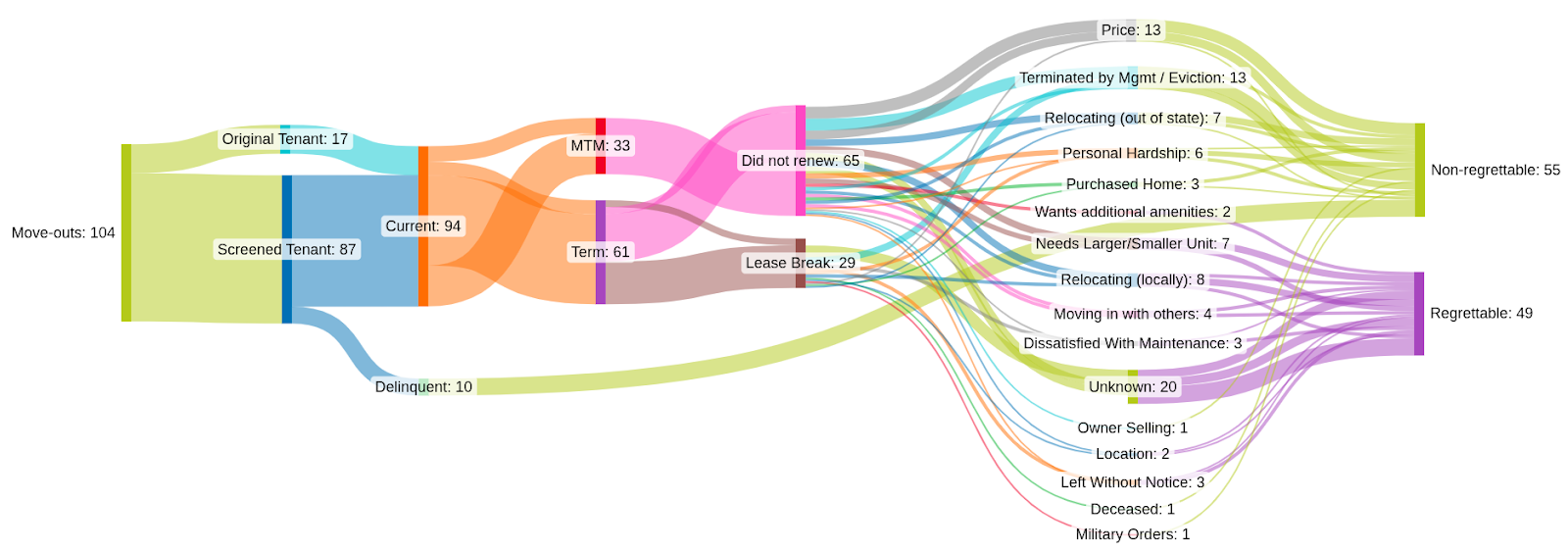
Marketing remains the least cooperative part of our business. Zillow’s dominance in the rental market has created a near-monopoly with little incentive to innovate. Their reporting is opaque, pricing inflexible, and support minimal. We’ve experimented with paid social to generate new leads, but the quality of those leads has been poor. Looking at our typical LTV / CAC per user, the economics of paid social channels simply don’t work.
The broader lesson here is humility: not every problem yields to iteration. Some are structural, and we have to adapt. For now, we are focusing on developing a more granular understanding of how lead source, conversion rate, and retention interact - a kind of demand curve for our own portfolio.
Many experiments we tried this year didn’t work the way we hoped. Progress in operations, as in investing, is rarely linear.
We end the year with a company that is more measurable, disciplined, and scalable than it was twelve months ago. We’ve replaced sheer will with repeatable processes and manual wrangling with phase 1 of automation.
What we’ve learned this year is that real scalability is not about doing more things - it’s about making sure the things we already do can survive multiplication.
Louisa & Jonathan
m5x2


